Booking choice: The private art day, from $278 per person. Check dates Compare the options below
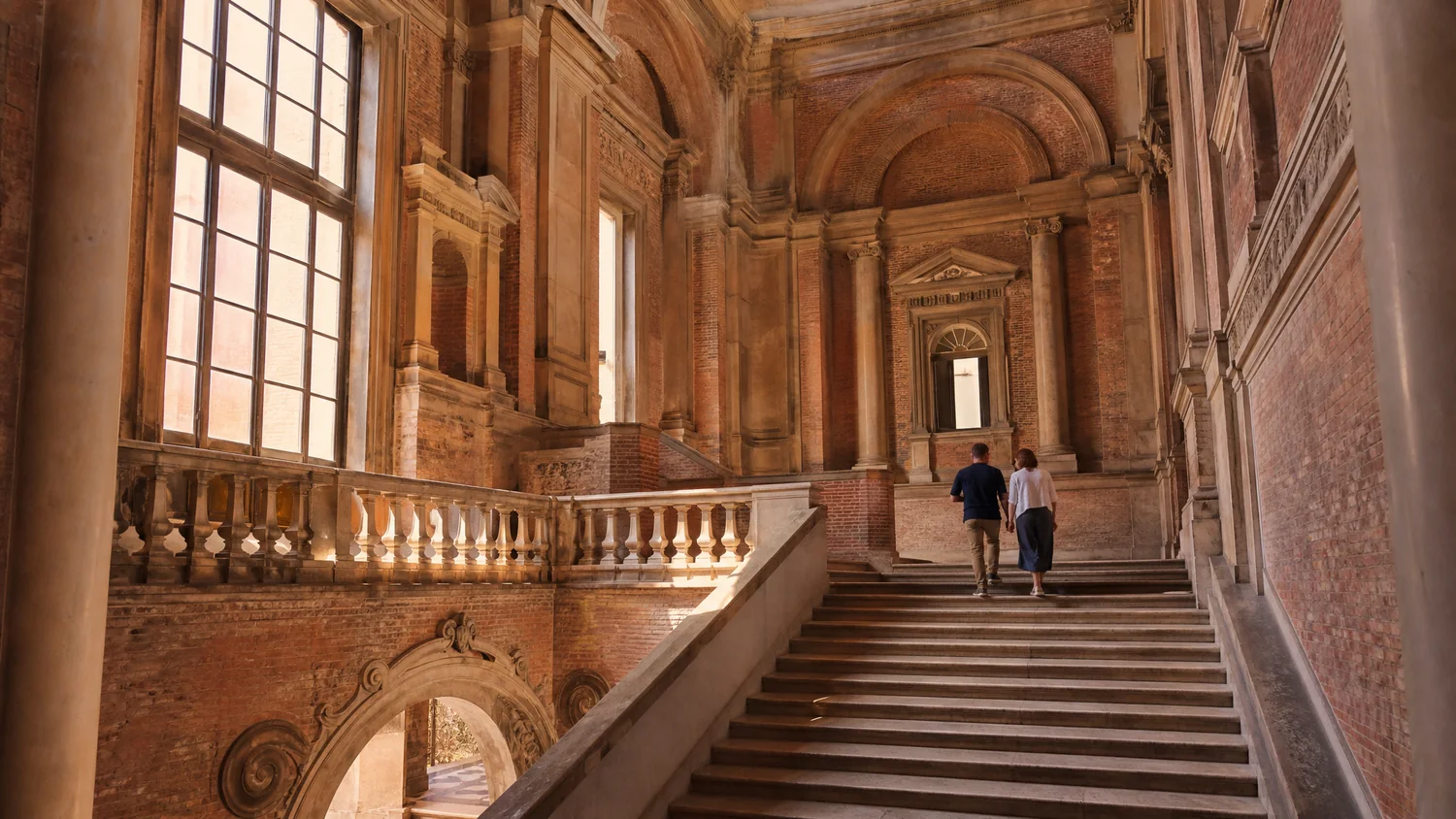
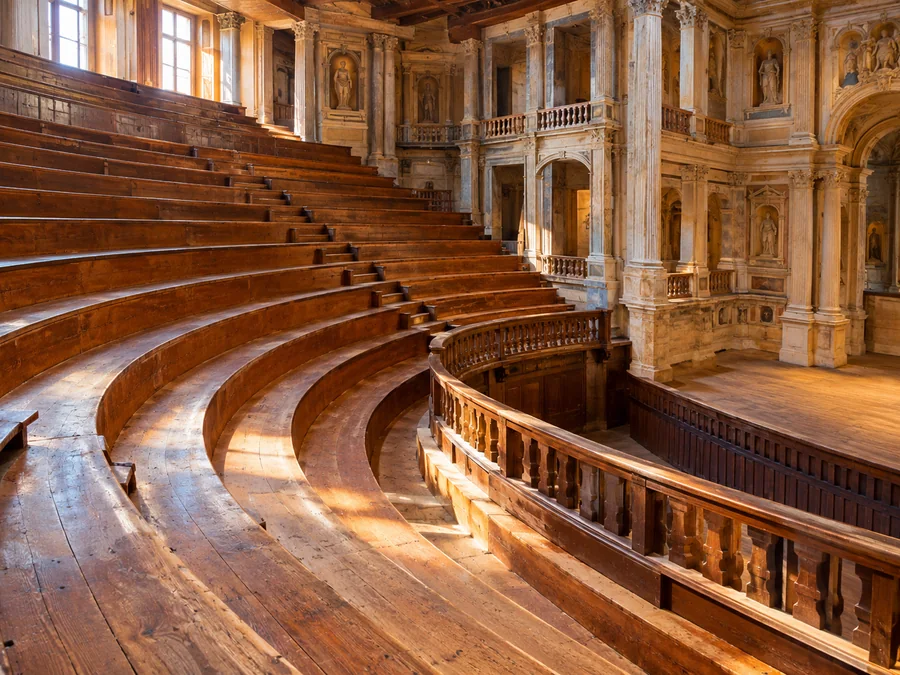
The Teatro Farnese is one of the great survivors of European theatre: a court theatre of 1618, built of wood inside a palace armoury, for a family that wanted to dazzle. Its story runs from Duke Ranuccio I Farnese to Claudio Monteverdi, from the Bourbons to the Allied bombs, and on to the rebuilding that gave it the honey-coloured bare wood you see today.
Below: who built it and why it waited ten years, the flooded spectacle of 1628, what it was made of, the eight performances, the long decline, the bombing of 13 May 1944, the rebuilding and why historians still care. Facts come from the Pilotta's official pages and Italian and English Wikipedia; where sources differ, we say so.
The quick answer
Duke Ranuccio I Farnese had the theatre built in 1618 by Giovan Battista Aleotti, in wood covered with stucco painted to look like marble, in a former armoury hall on the first floor of the Pilotta. It stood unused until 21 December 1628, when it opened for the wedding of Odoardo Farnese and Margherita de' Medici with 'Mercurio e Marte', music by Claudio Monteverdi, and the floor flooded for a mock naval battle. It was used only eight times, the last in 1732, was almost destroyed by bombing on 13 May 1944 and was rebuilt after the war.
Who built the Teatro Farnese, and when?
Duke Ranuccio I Farnese commissioned it, and the architect Giovan Battista Aleotti, called 'l'Argenta', built it in 1618. The official Pilotta page says the structure was complete in 1619.
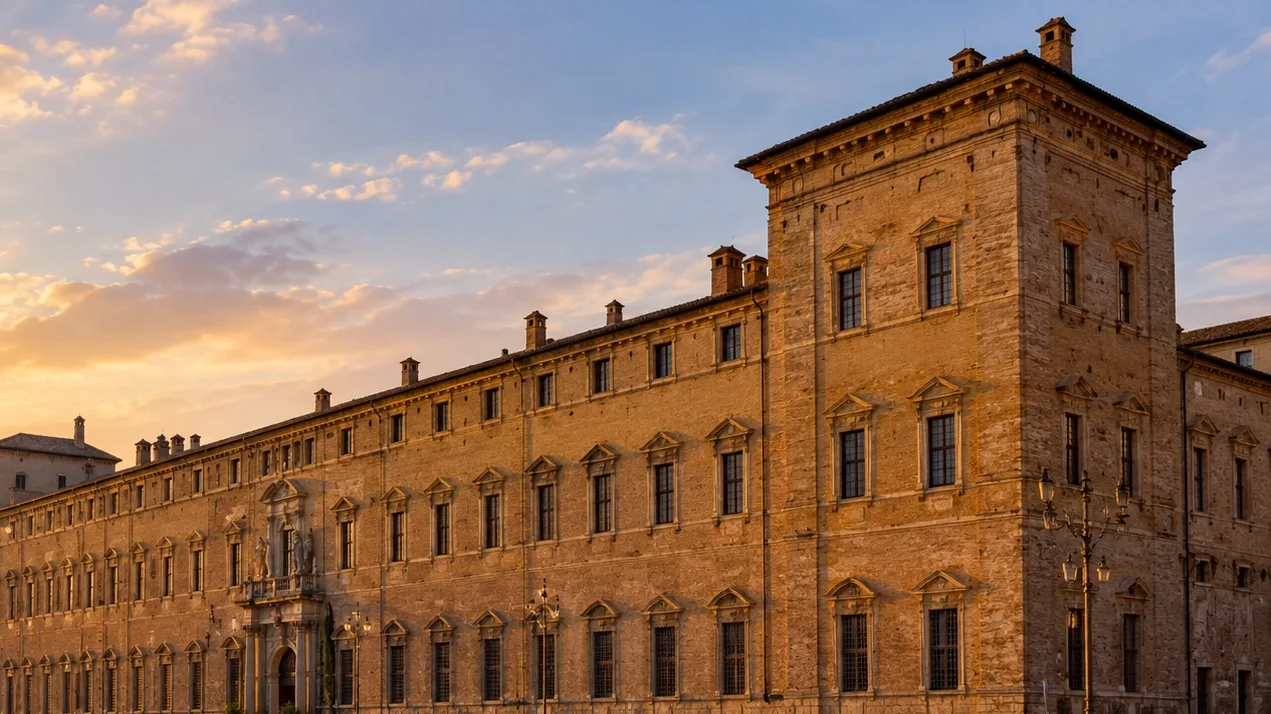
Aleotti (1546 to 1636) worked with Giovan Battista Magnani and Pier Francesco Battistelli, and they fitted the theatre into a vast existing hall of the Pilotta, a former armoury on the first floor. Ranuccio, duke from 1592 to 1622, was a builder: he also pushed on with the Pilotta itself and revived the University of Parma. He never saw his theatre used; he died in 1622.
Why did the Teatro Farnese stay closed for ten years?
It was finished around 1618 to 1619 but not inaugurated until 21 December 1628, when a grand enough occasion came: the wedding of Duke Odoardo Farnese and Margherita de' Medici.
Odoardo, Ranuccio's son, was born in 1612 and became duke as a boy, under a regency. His marriage into the Medici of Florence was exactly the kind of dynastic triumph a court theatre was built to celebrate, and the Farnese spared nothing for it.
See the theatre, the Galleria and Correggio's Parma with a private guide, all tickets included.
Check dates for the private art dayWhat happened at the 1628 opening?
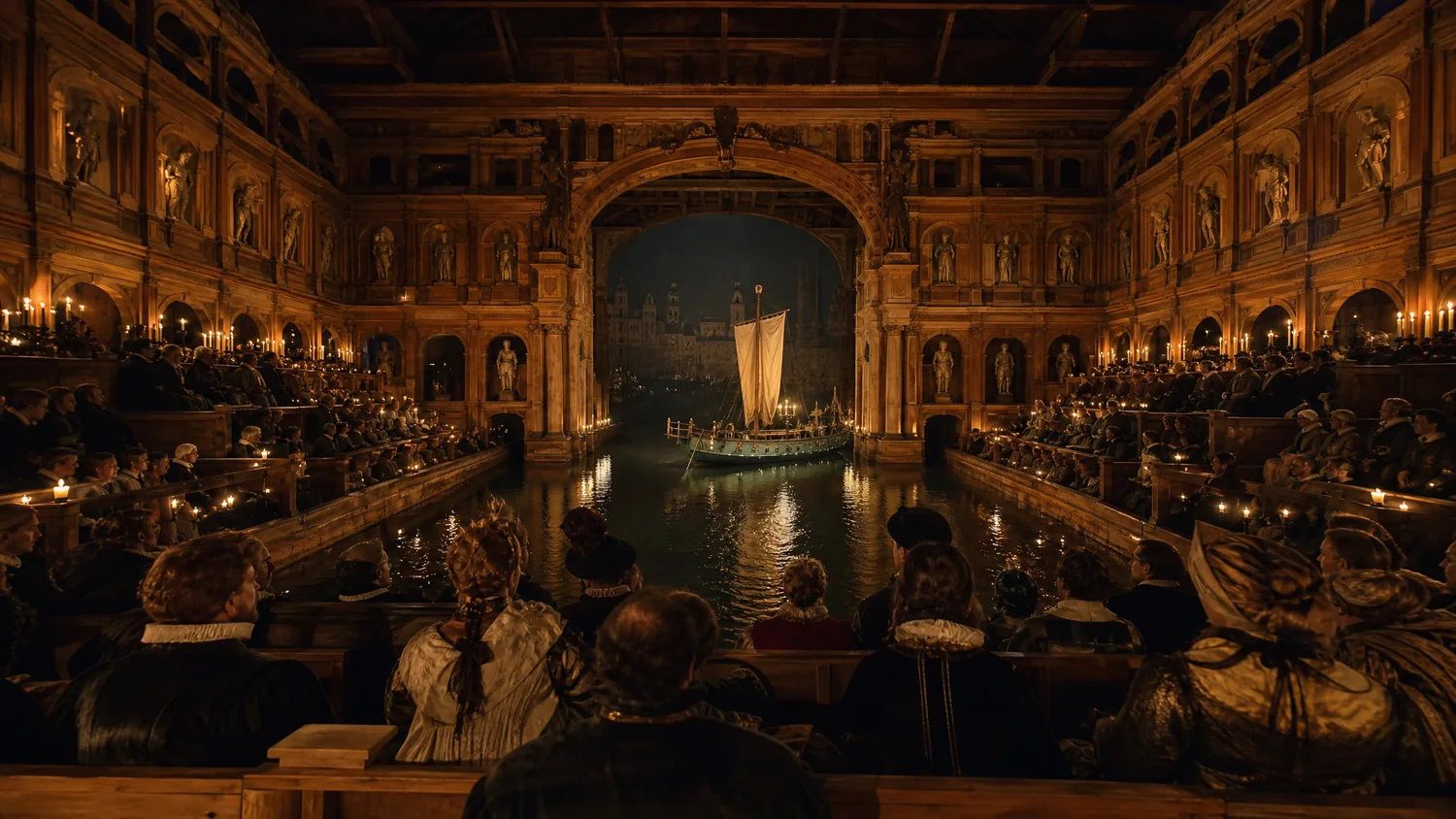
A spectacle called 'Mercurio e Marte' (Mercury and Mars), with text by Claudio Achillini, music by Claudio Monteverdi and scenery by Francesco Guitti, ending with the floor flooded for a naumachia, a mock naval battle.
The official Pilotta page explains how: the floor of the cavea could be flooded with water stored in tanks fed by the Farnese aqueduct. Imagine the court on the wooden tiers by candlelight, watching gods and ships where the dancers had been.
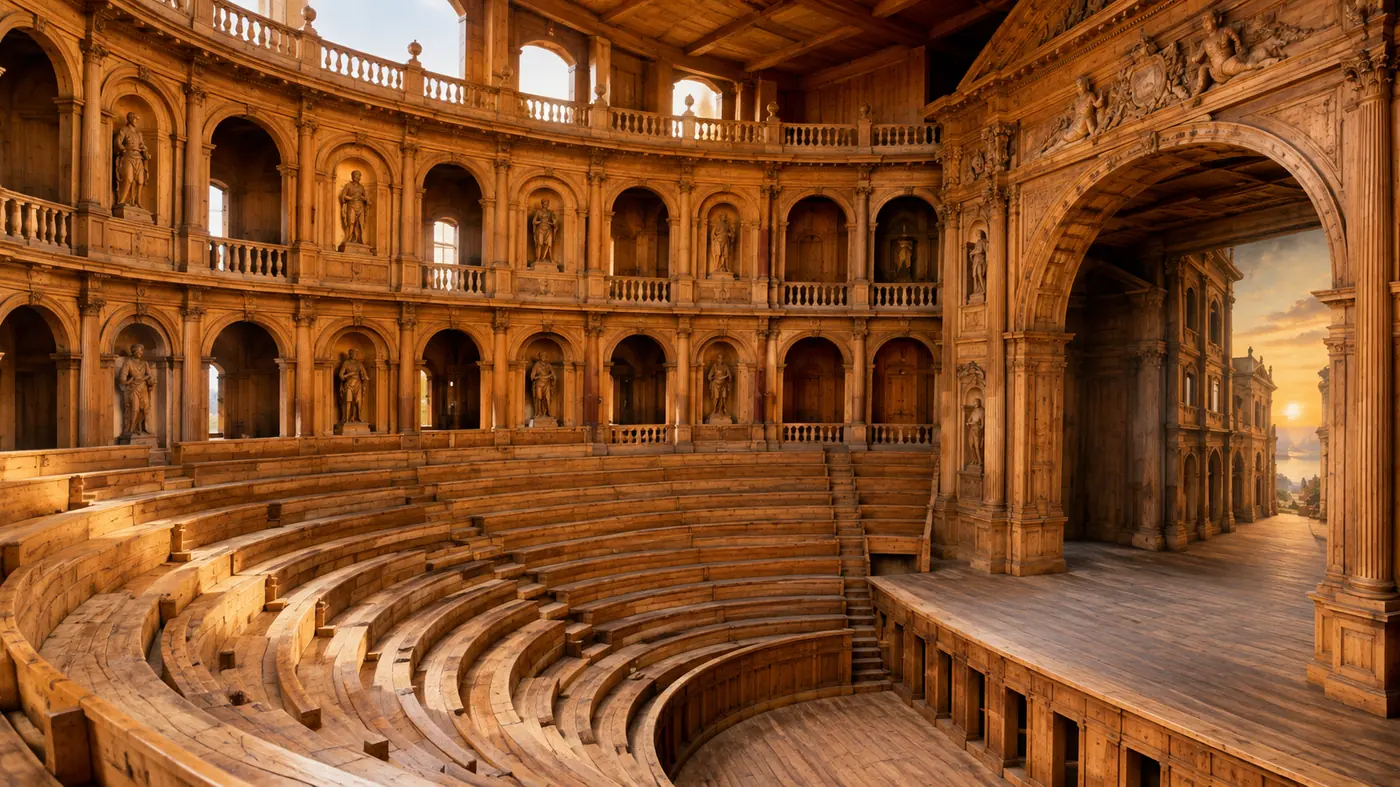
What is the Teatro Farnese made of, and how big is it?
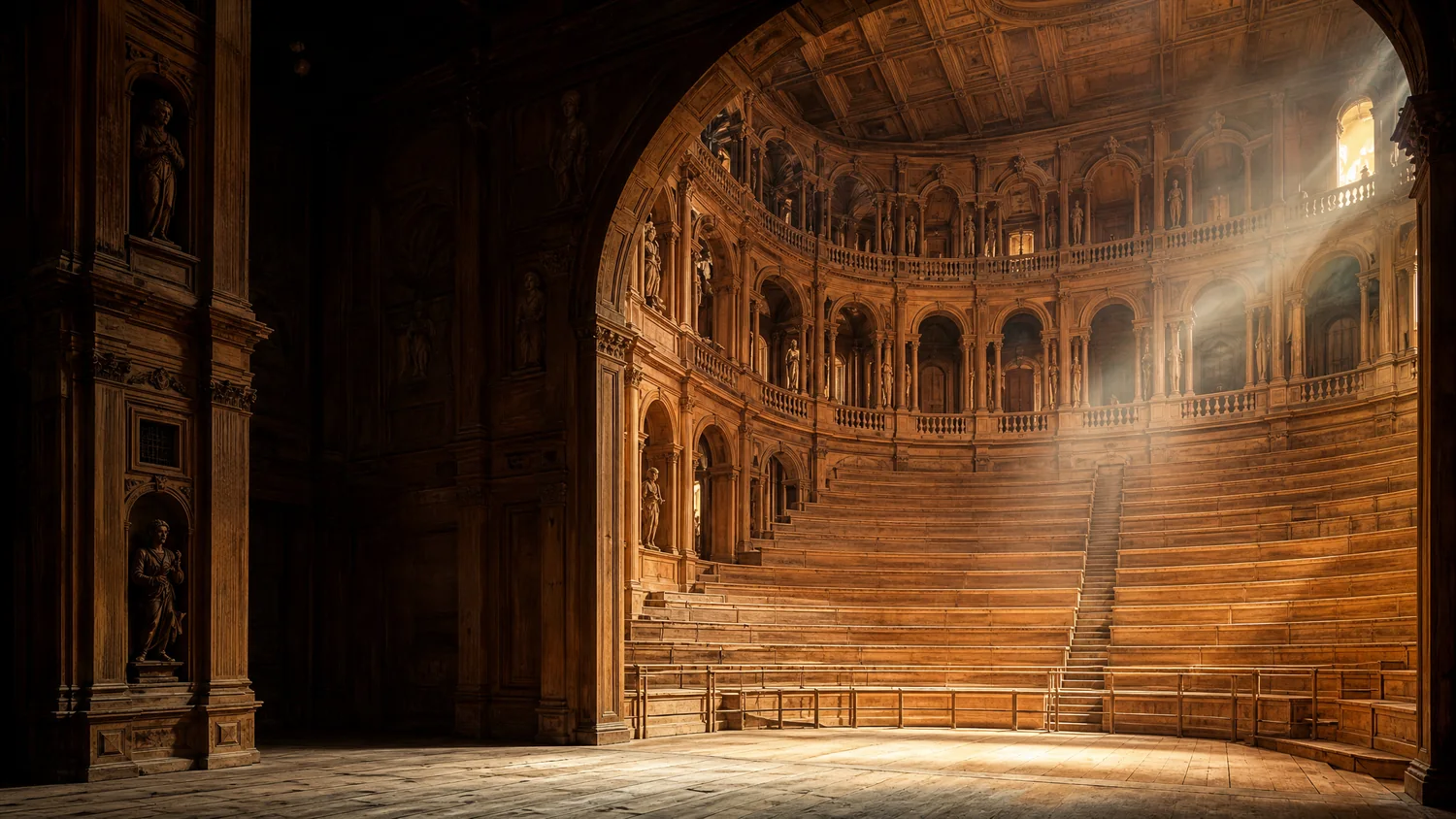
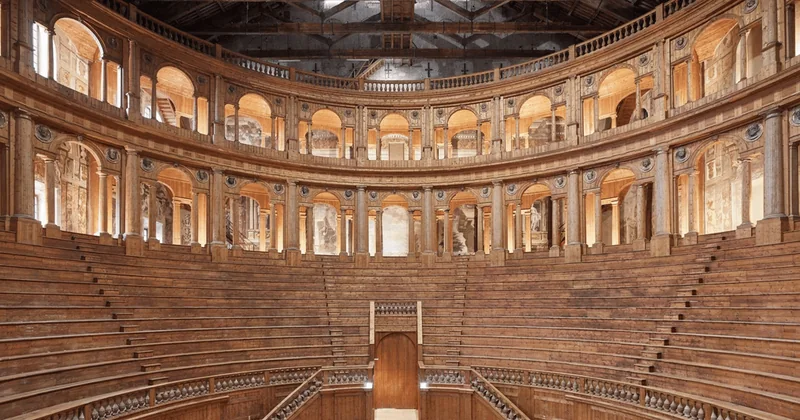
Wood, mostly red fir from Friuli, once covered with stucco painted to imitate marble. The hall is about 87 m long, 32 m wide and 22 m high, with a U-shaped cavea of 14 tiers for about 3,000 spectators.
Building in wood and painted plaster was quick and cheap, and it made the theatre look like marble and gold by candlelight. Sources differ a little on the capacity: the museum says over 3,000.
| Feature | Figure | Source |
|---|---|---|
| Built | 1618 (structure complete 1619) | Wikipedia; Pilotta |
| Opened | 21 December 1628 | Italian Wikipedia |
| Hall | About 87 x 32 x 22 m | Italian Wikipedia |
| Stage | About 40 m deep, 12 m opening | Italian Wikipedia |
| Seating | 14 tiers, about 3,000 people | Pilotta |
| Performances | Eight, the last in 1732 | Italian Wikipedia |
| Bombed | 13 May 1944 | Italian Wikipedia |
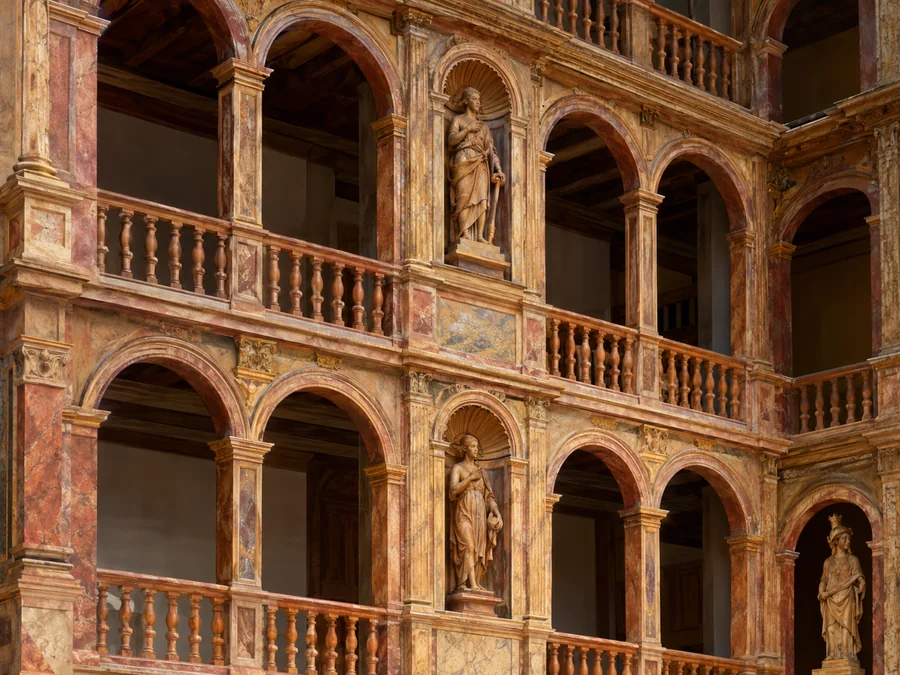
How many times was the Teatro Farnese used?
Only eight times, according to Italian Wikipedia. The last performance was in 1732, for Don Carlos of Bourbon, the new heir to Parma.
The Farnese line ended in 1731 with Duke Antonio, and Parma passed to Don Carlos, the son of Elisabetta Farnese and the King of Spain. After 1732 the theatre was left to decay. For the family behind it, read the Farnese dukes of Parma.
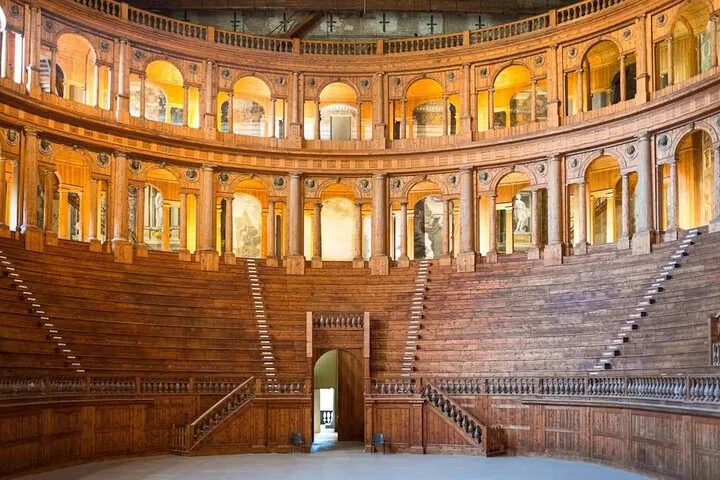
A full hour inside the Teatro Farnese with a private guide, after 1 hour 30 minutes in the Pilotta. Museum tickets are extra.
Explore the private theatre and Pilotta tourWhat happened to the Teatro Farnese in 1944?
An Allied air raid on 13 May 1944 almost destroyed it. After the war it was rebuilt with the recovered materials, and much of the wood was left bare rather than repainted.
The same raids hit the Pilotta and the ducal buildings beside it. Sources give different dates for the rebuilding: Italian Wikipedia says 1956 to 1960, English Wikipedia a reopening in 1962, and the museum describes work from 1953 into the 1960s. The bare wood is the result: the theatre you see is warmer and plainer than the painted marble of 1628.
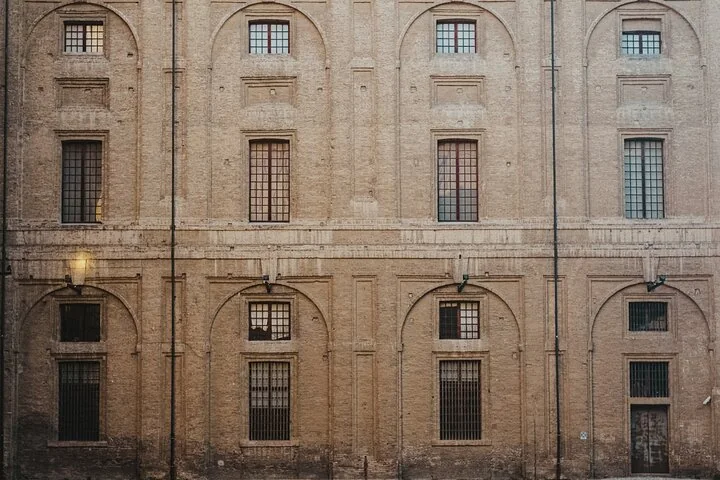
Why is the Teatro Farnese important?
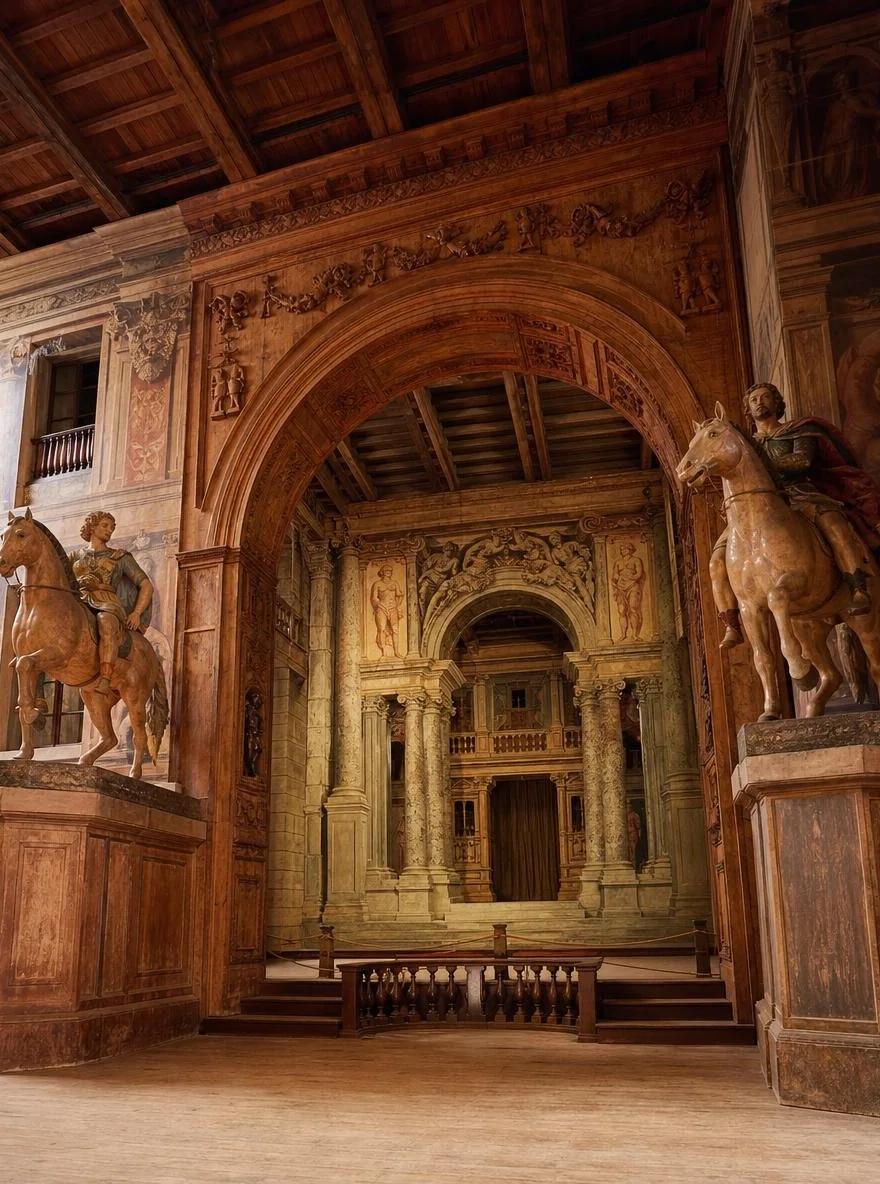
It is often called one of the first theatres with a permanent proscenium arch, and it is one of three surviving Renaissance-era theatres in Italy, with the Teatro Olimpico in Vicenza and the Teatro all'antica in Sabbioneta.
The arch frames the stage like a picture, the idea behind most theatres built since. The U-shaped cavea left the floor free for dancing, spectacle and, in 1628, water. Standing on that floor, you are in the laboratory of the modern stage.
A private guide can show you the arch, the stage and the tiers, then walk you through the Pilotta.
Check dates for the private theatre and Pilotta tourAre there performances in the Teatro Farnese today?
Rarely. The Festival Verdi staged Verdi's Stiffelio here in 2017, directed by Graham Vick, with the audience standing among the action; there are occasional concerts and events.
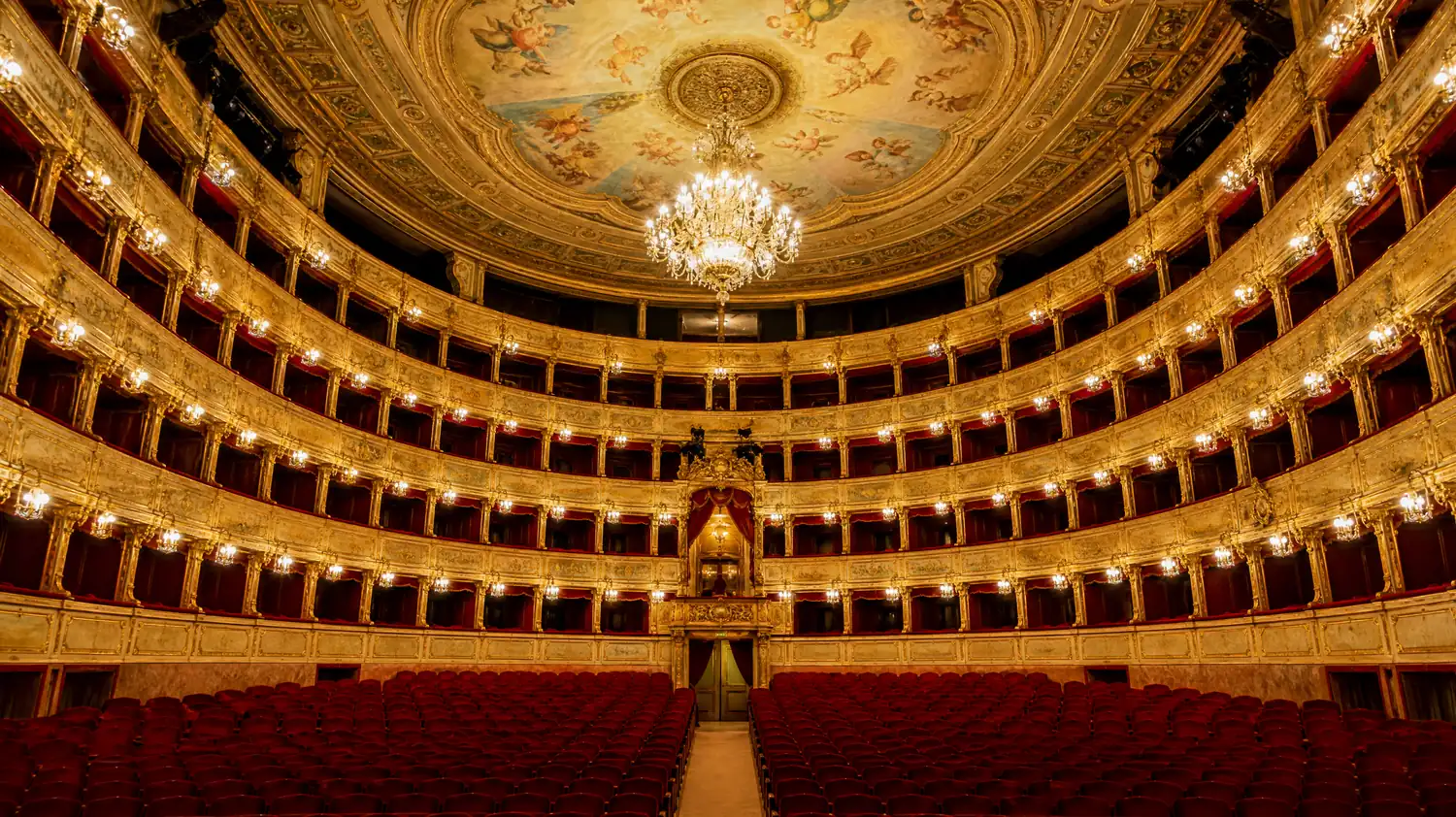
The 2026 Festival Verdi (1 to 25 October) is at the Teatro Regio and in Busseto, not at the Farnese. On a normal day the theatre is part of the museum visit. For opera in Parma, read our guide to musical Parma.
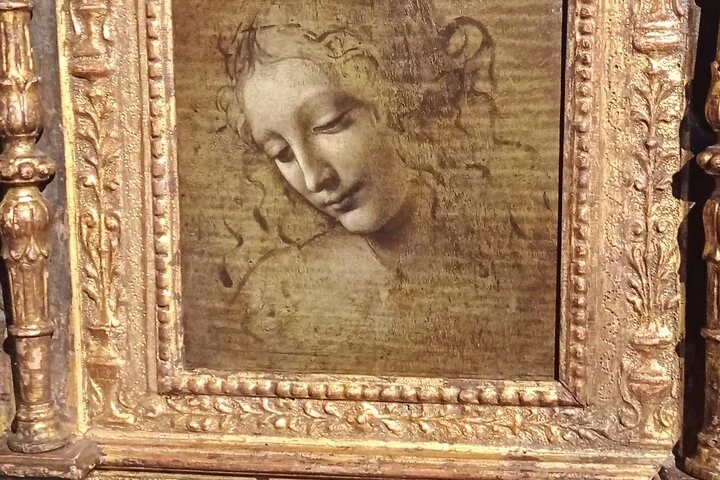
The theatre, the Galleria Nazionale and Correggio's domes in one private morning, tickets included, rated 5.0 from 8 reviews.
Explore the private art dayFrequently asked questions
When was the Teatro Farnese built?
In 1618, by Giovan Battista Aleotti for Duke Ranuccio I Farnese. It was inaugurated only on 21 December 1628.
Was the Teatro Farnese really flooded?
Yes. At the 1628 opening the floor was flooded for a mock naval battle, with water from tanks fed by the Farnese aqueduct.
Who wrote the music for the opening?
Claudio Monteverdi, for the spectacle 'Mercurio e Marte', with text by Claudio Achillini.
Why is the wood bare?
The theatre was almost destroyed by bombing in 1944 and rebuilt after the war; much of the wood was left unpainted.
Ready to book
Choose your visit
Free cancellation up to 24 hours before on every option. Prices are from-prices in USD and move with the season.
Private Parma Art Day with the Teatro Farnese
- Private guide for your group, 9:00 start at the Pilotta entrance
- Entrance tickets included: Galleria Nazionale, Teatro Farnese, Cathedral, Camera di San Paolo
- About 1 hour in the gallery and 30 minutes in the Teatro Farnese
Private Teatro Farnese and Pilotta Tour
- Private licensed guide for your group only, up to 15 people
- About 1 hour 30 minutes in the Pilotta, then 1 hour in the Teatro Farnese
- Meet at Piazza della Pilotta 5 and end back there